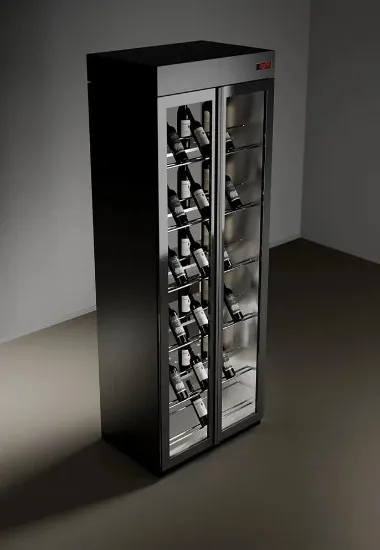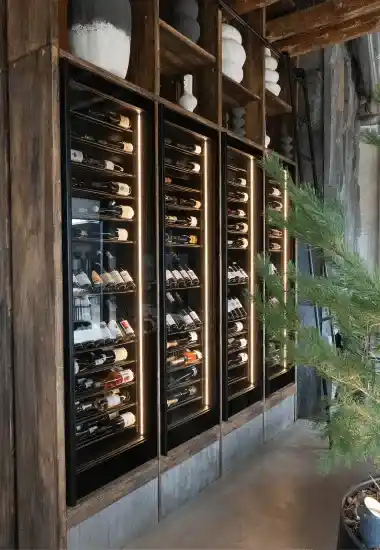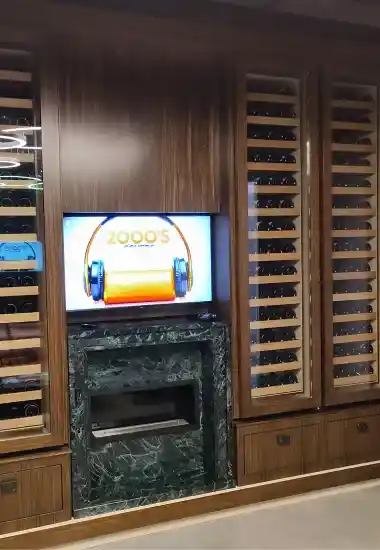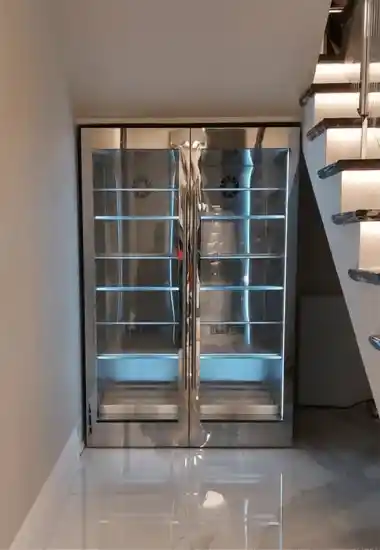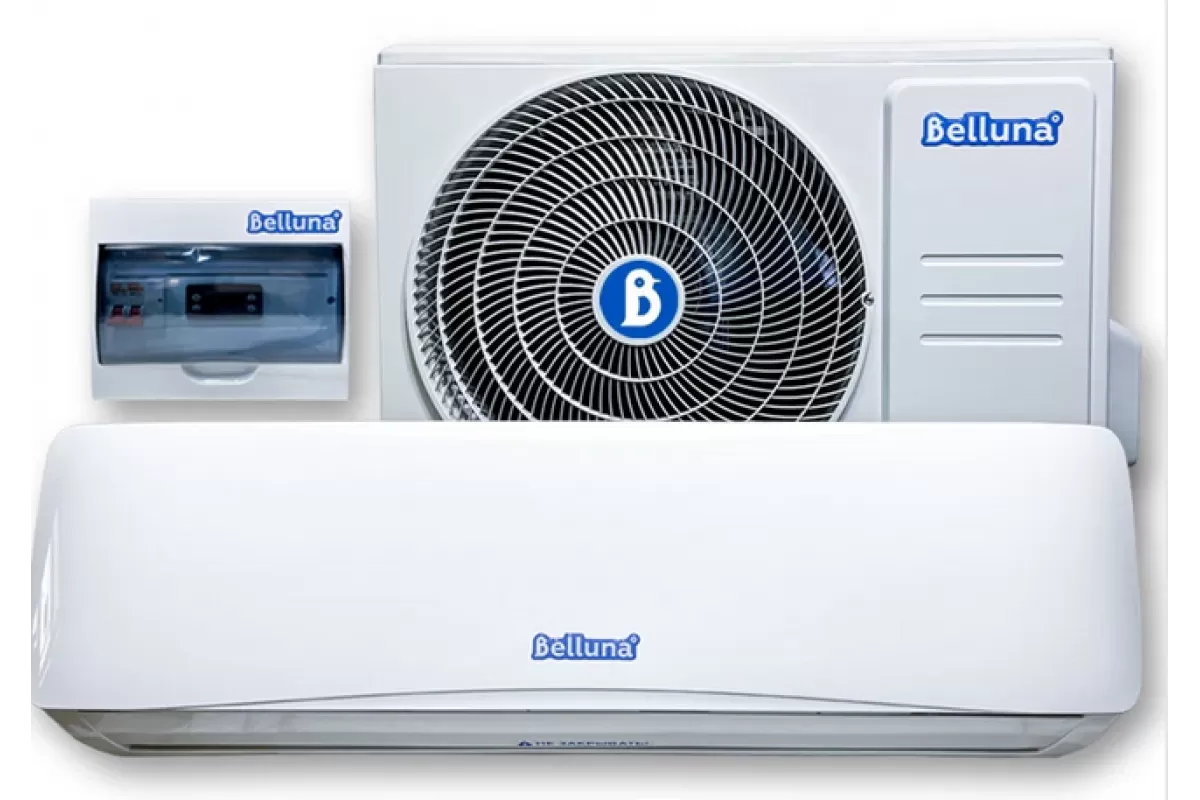
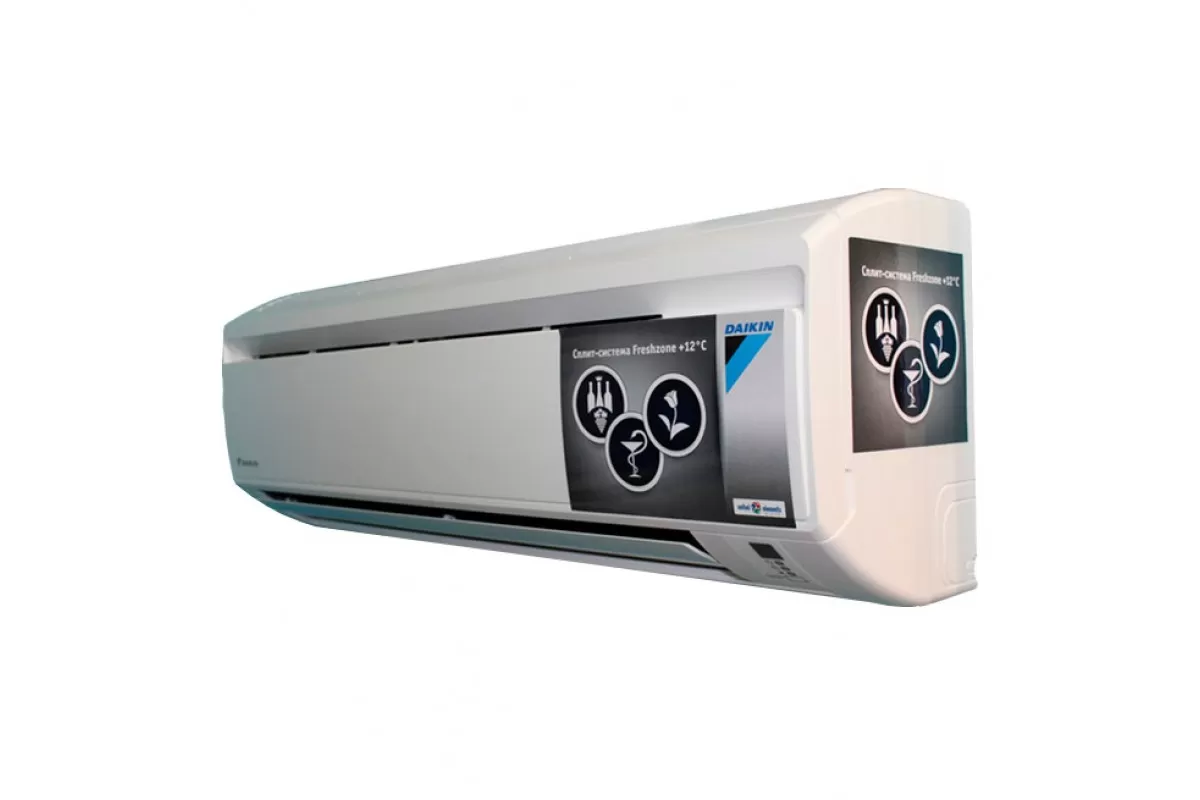
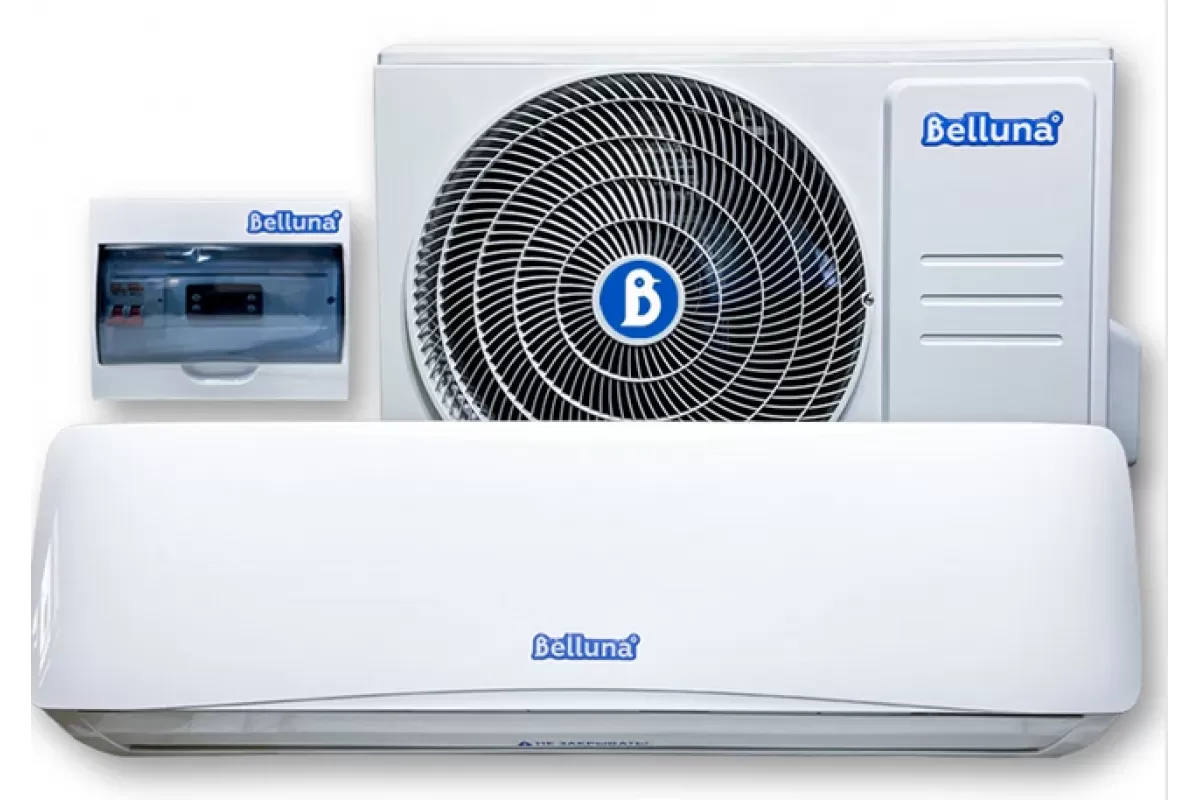
Wine cellar air conditioner Belluna S218 W
In stock
Learn more



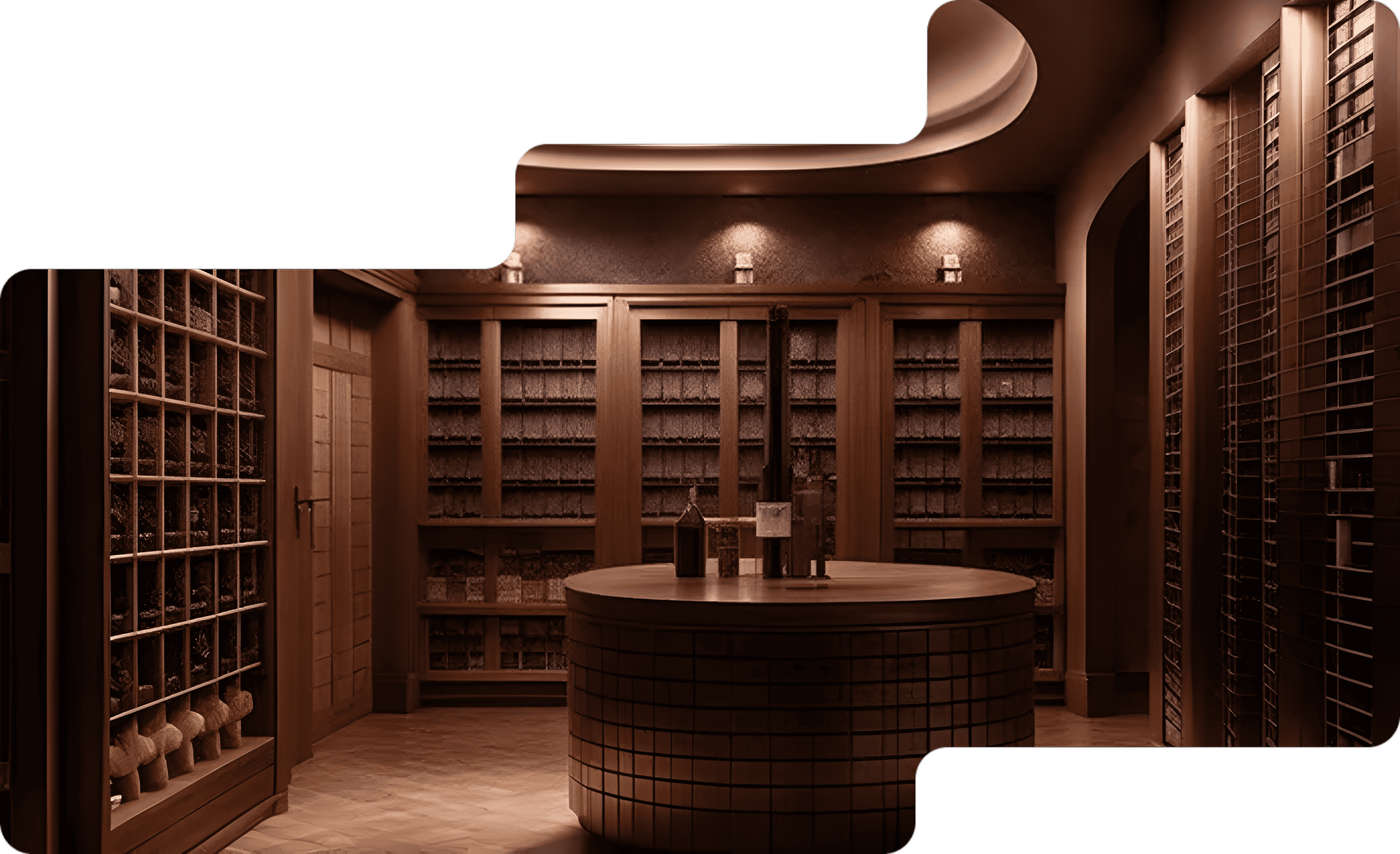
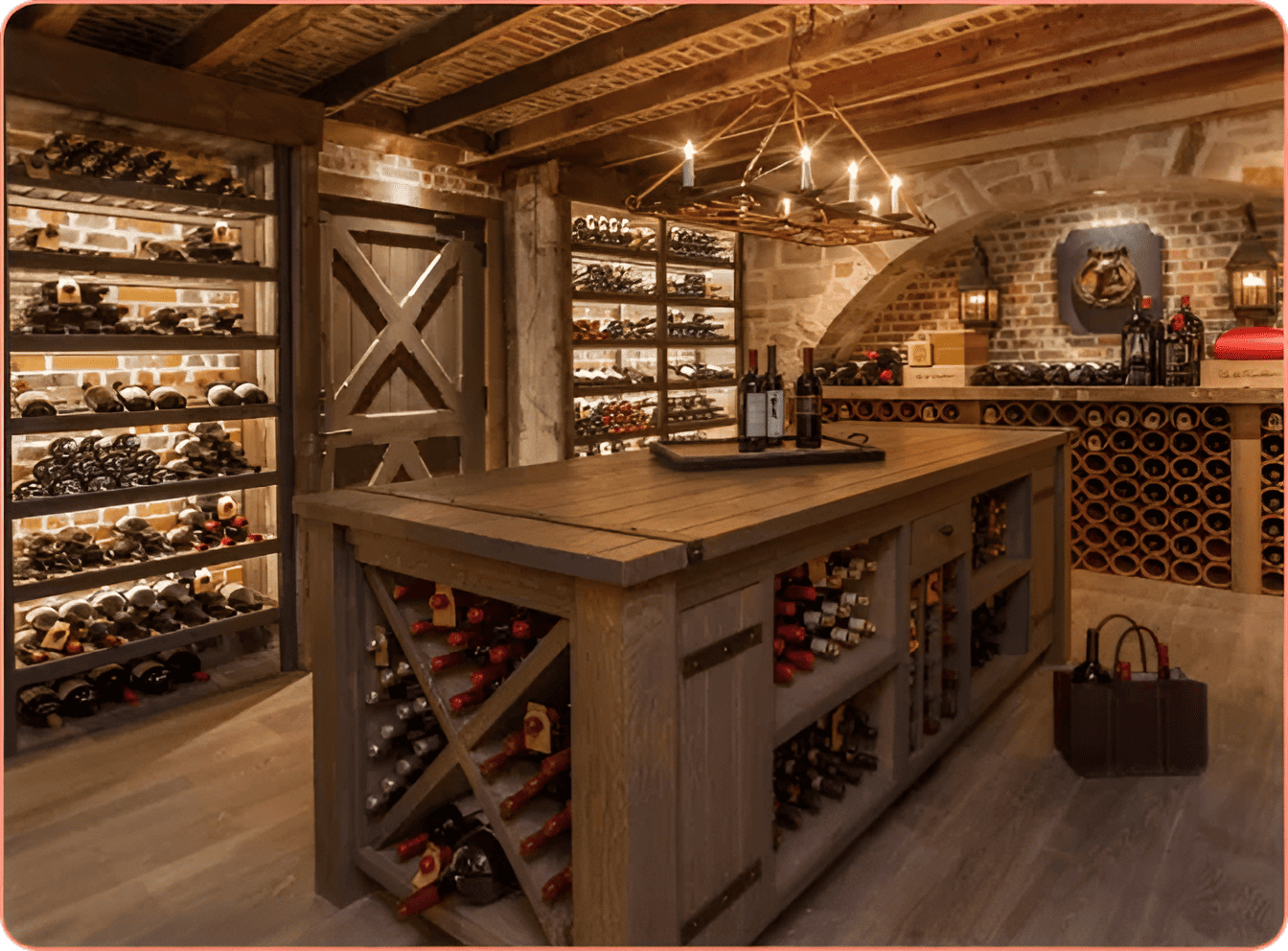
A wine cellar is a specially equipped space for storing wine in optimal conditions. It can be located in a house or in a separate building.
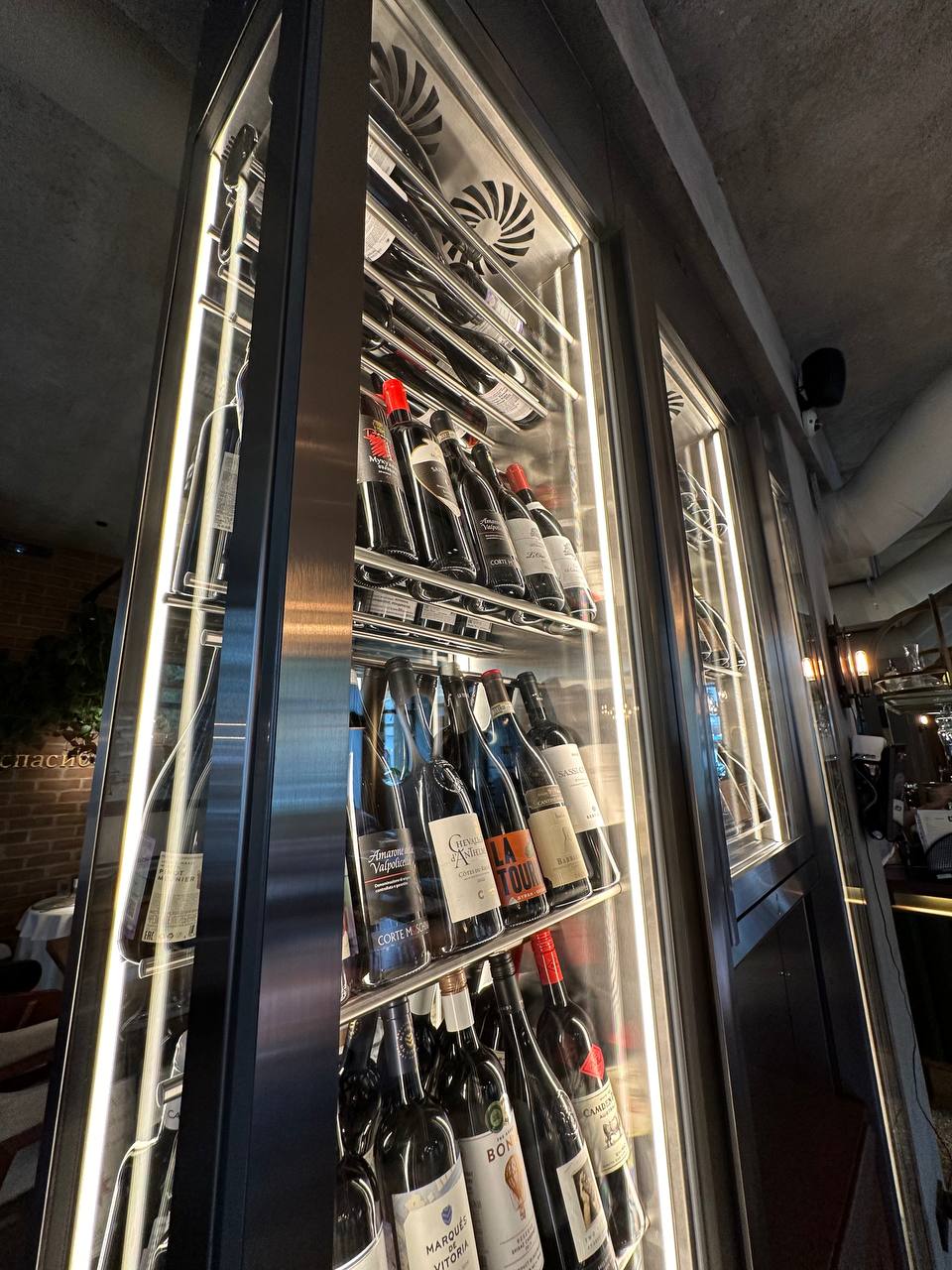
Wine needs to breathe, so good air circulation is essential. Without fresh air, mold and a musty odor can appear.
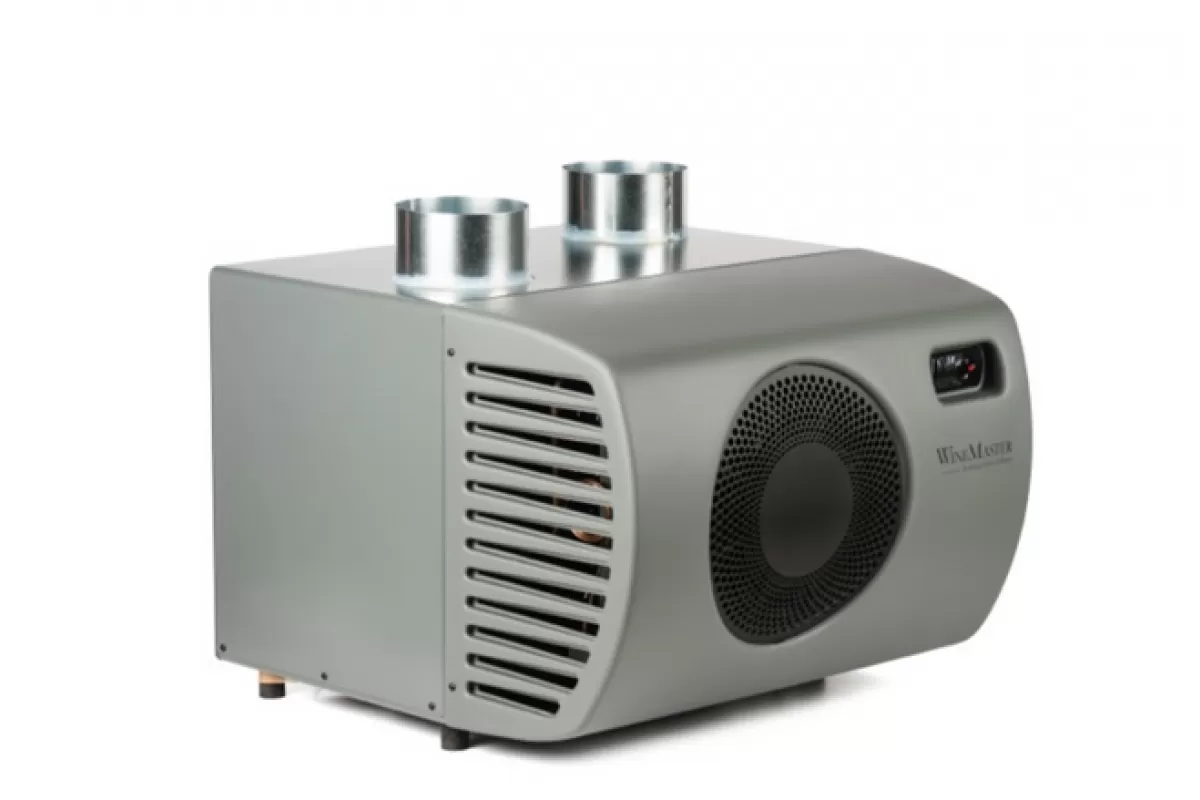
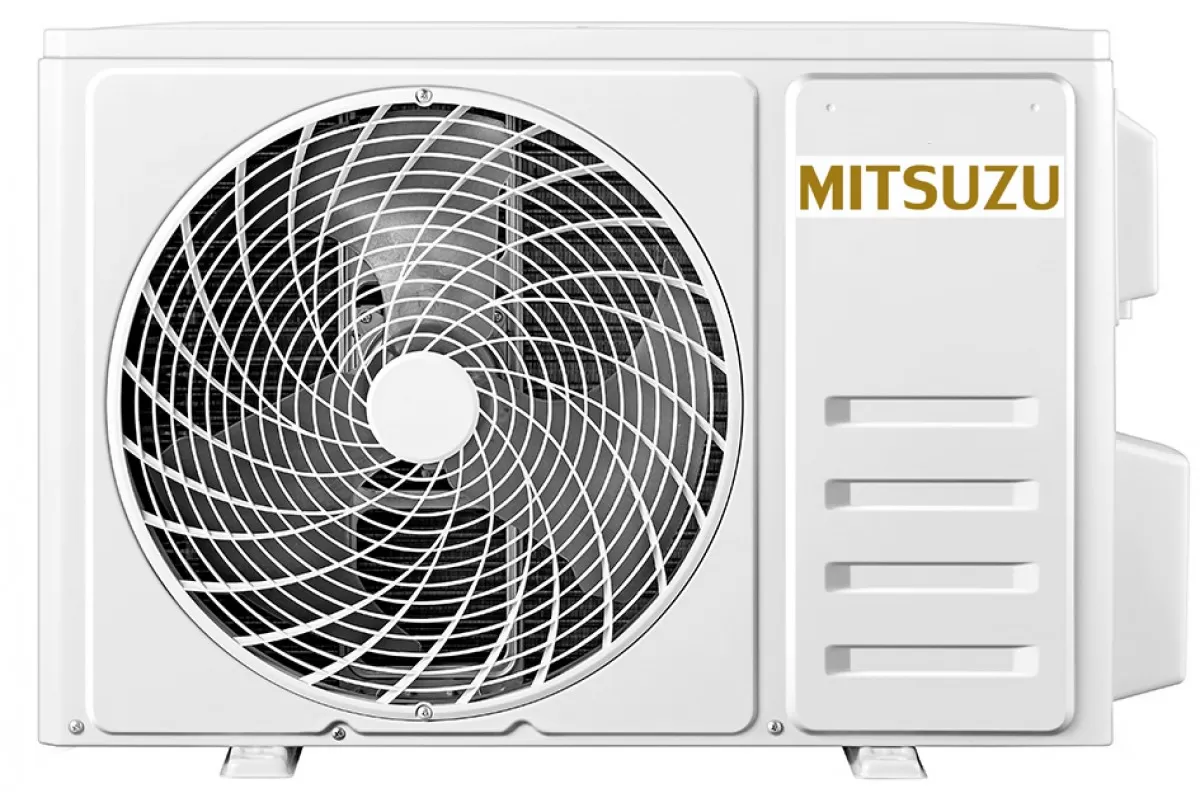
The optimal wine storage temperature is 10–15°C. Monoblocks and split systems are used to maintain stable conditions. The best option for precise temperature control with low power consumption is an inverter system.
It should be controlled to prevent condensation on bottles. For this purpose, special condensate drainage systems are used when building cellars.
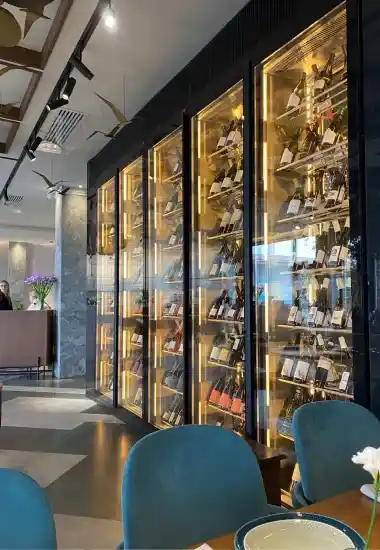
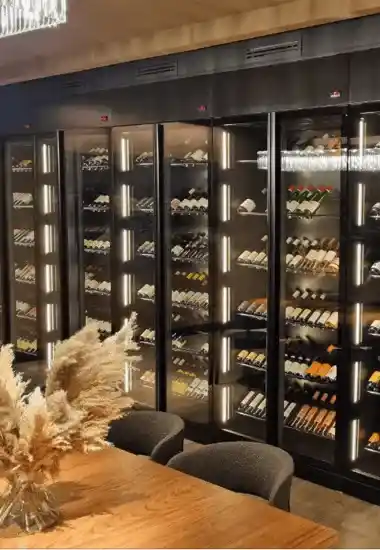
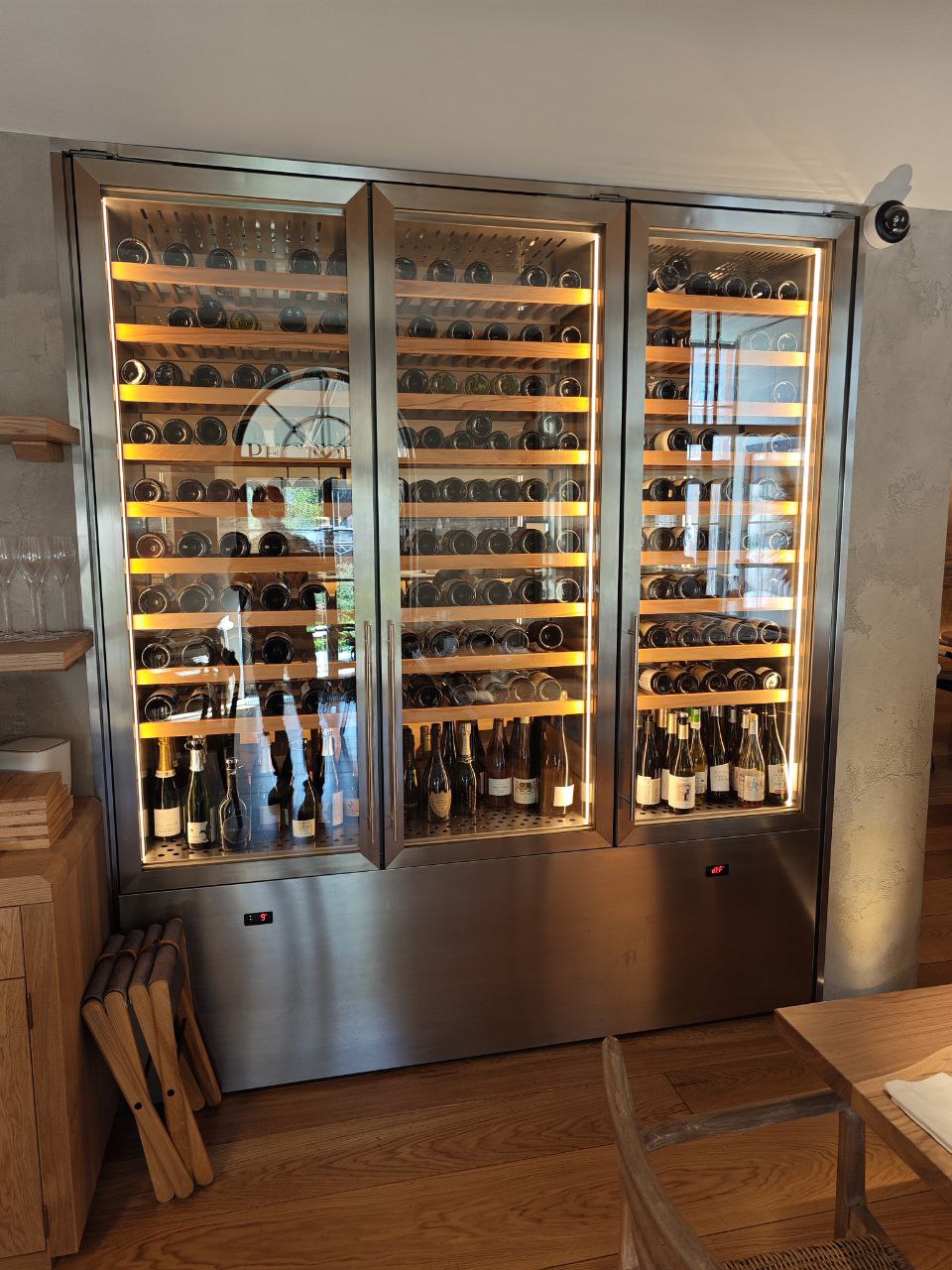
In cellars, lighting is not only functional but also part of the décor, while helping maintain optimal storage conditions. LED modules are ideal: they do not emit heat during operation.
We select equipment based on the room volume, cellar type, and the desired storage temperature.
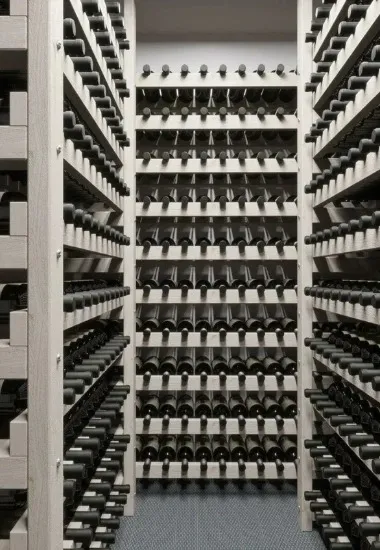
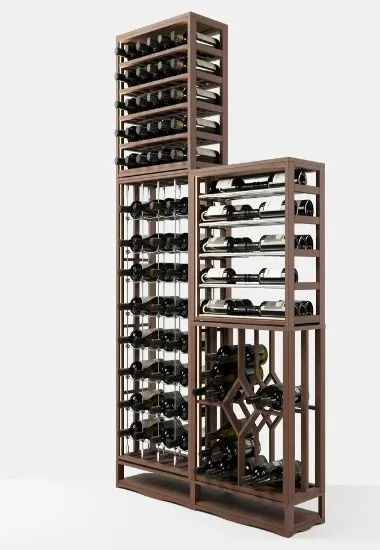
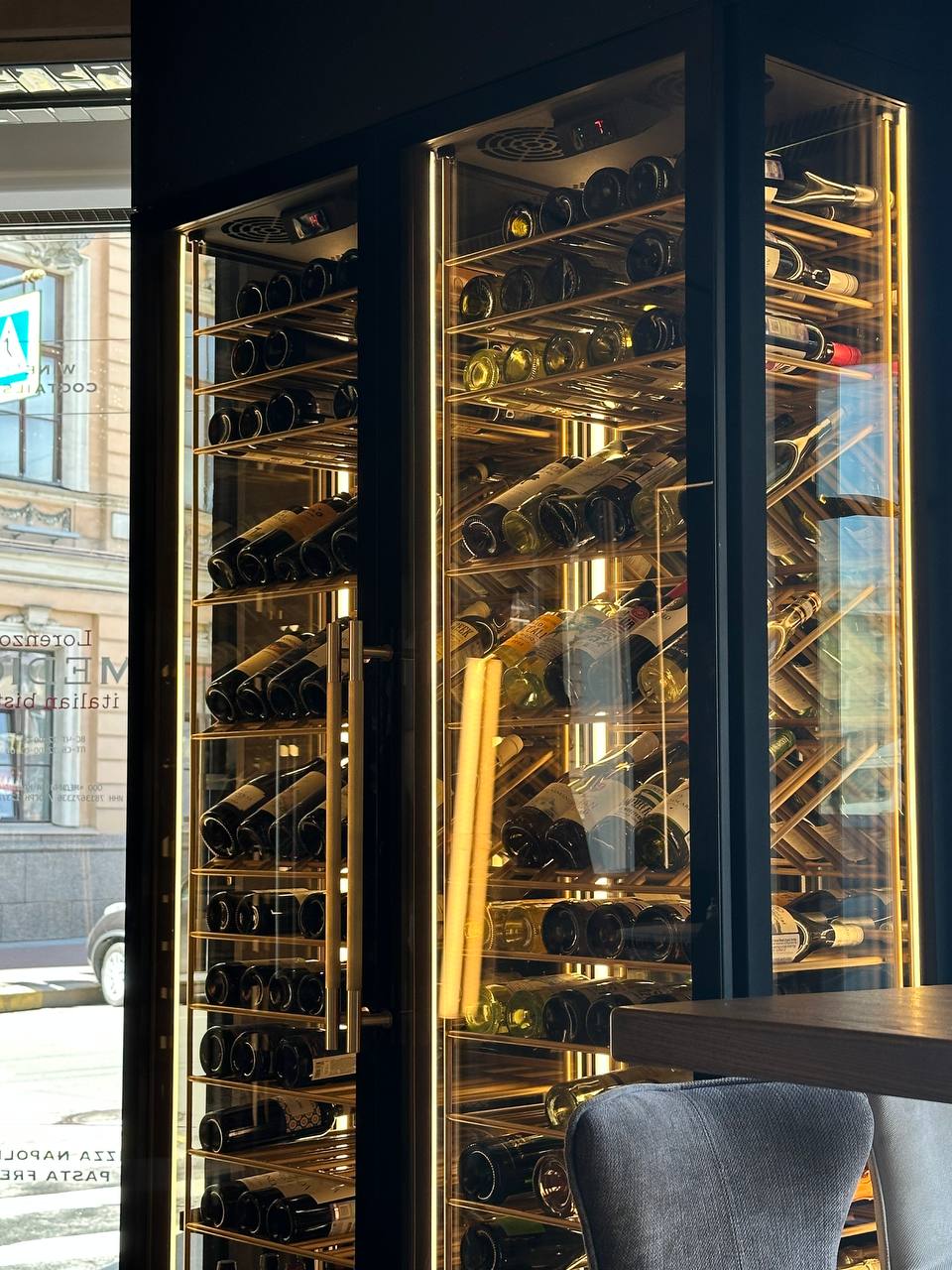
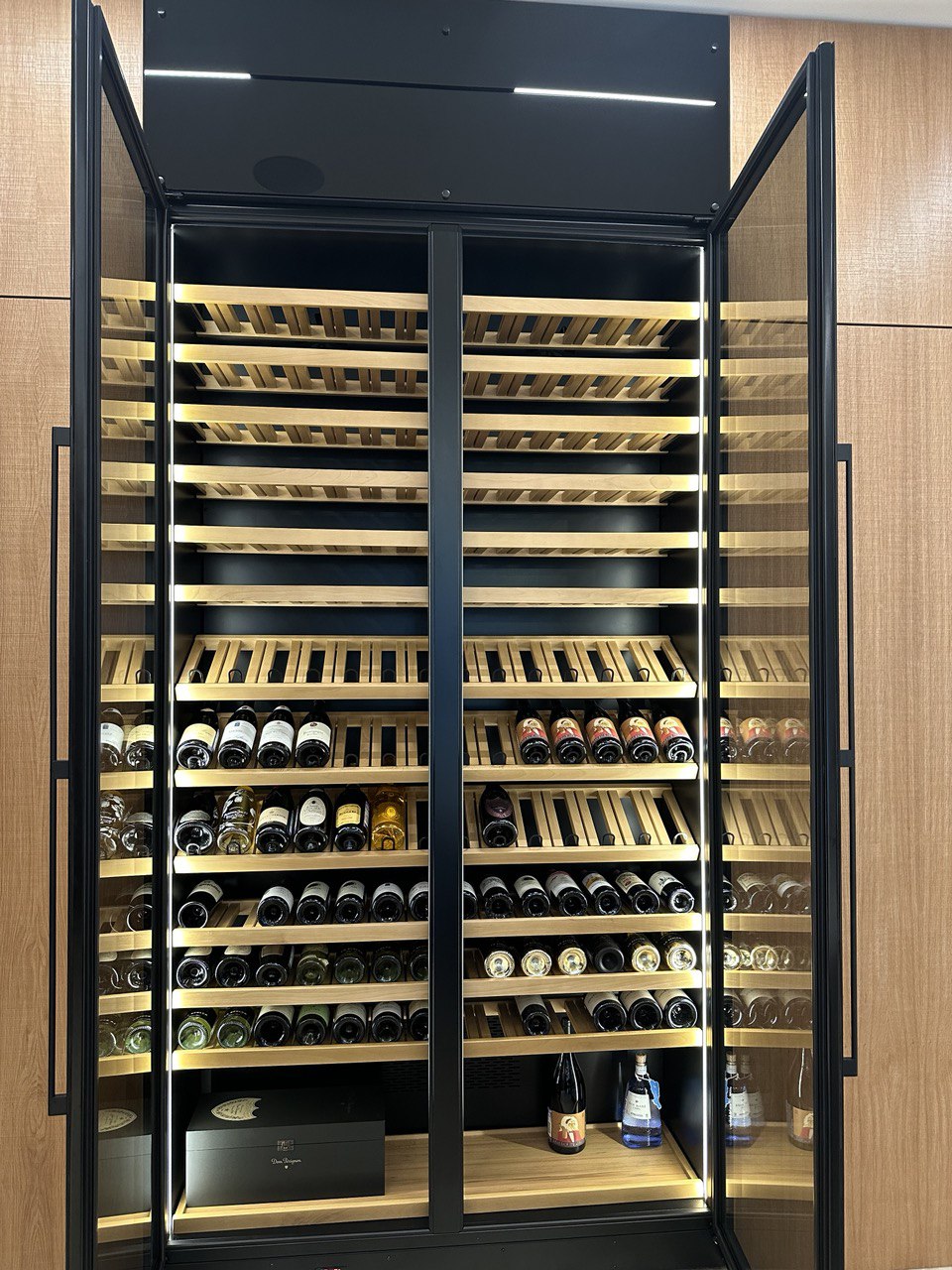
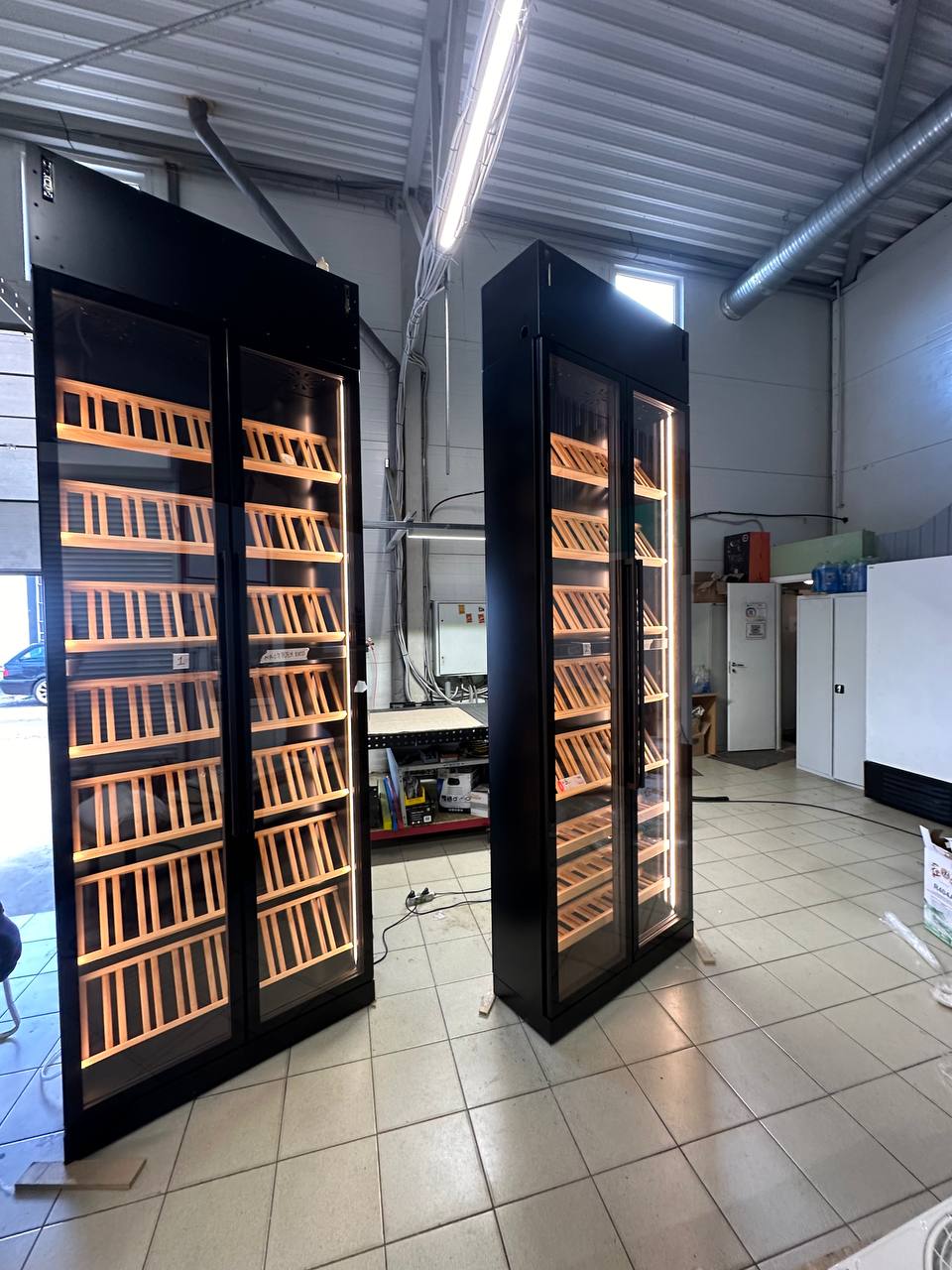
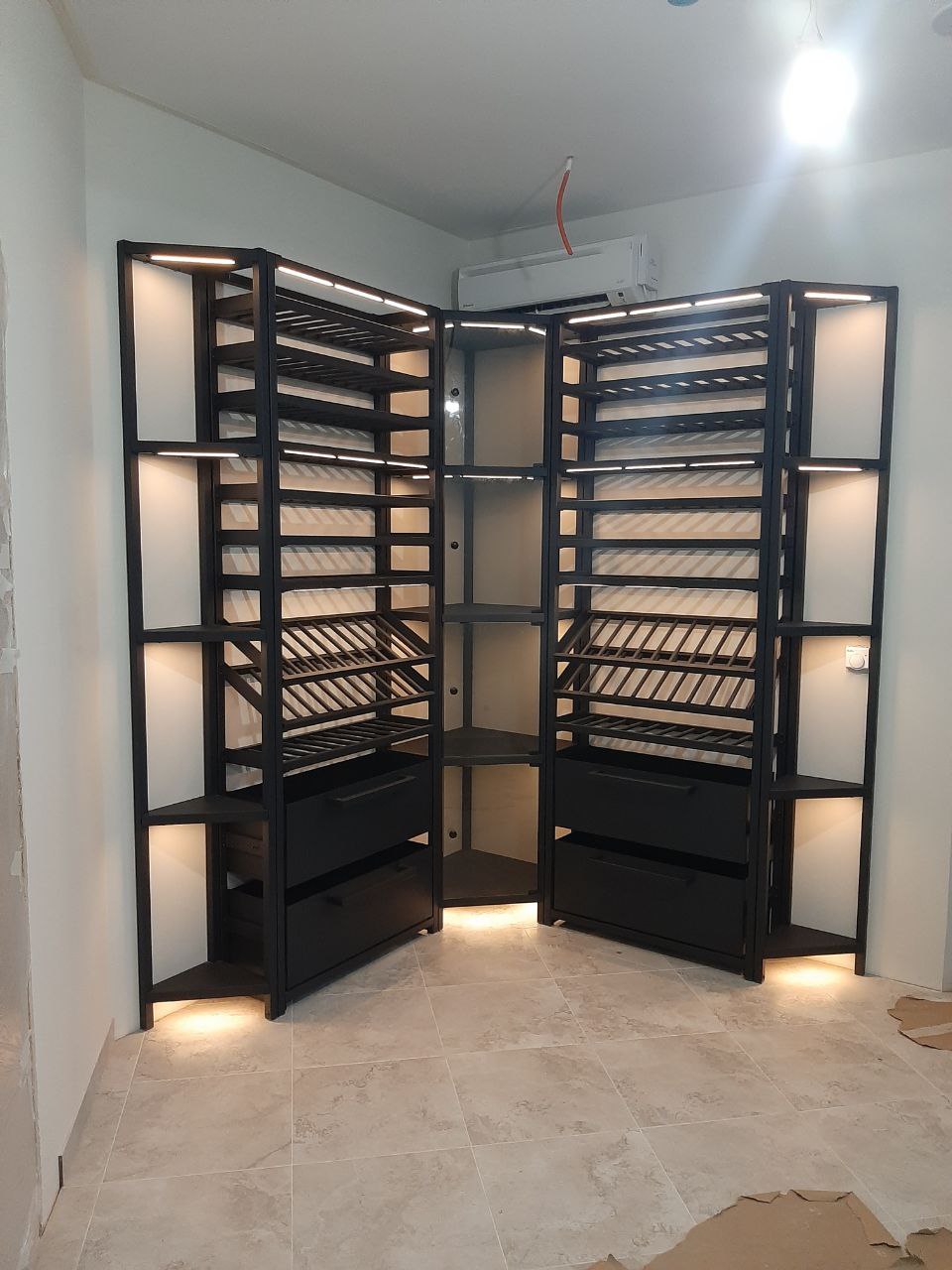
In addition, a wine cellar should be equipped with shelves and racks for bottle storage. Choosing storage systems is an important final stage of the project. Shelves and racks can be:
Cross-shaped and angled. Their advantages are strong display appeal and secure storage.
With recesses — this design prevents bottles from rolling.
Presentation racks — they look impressive.
Pull-out shelves — used for large-format bottles.
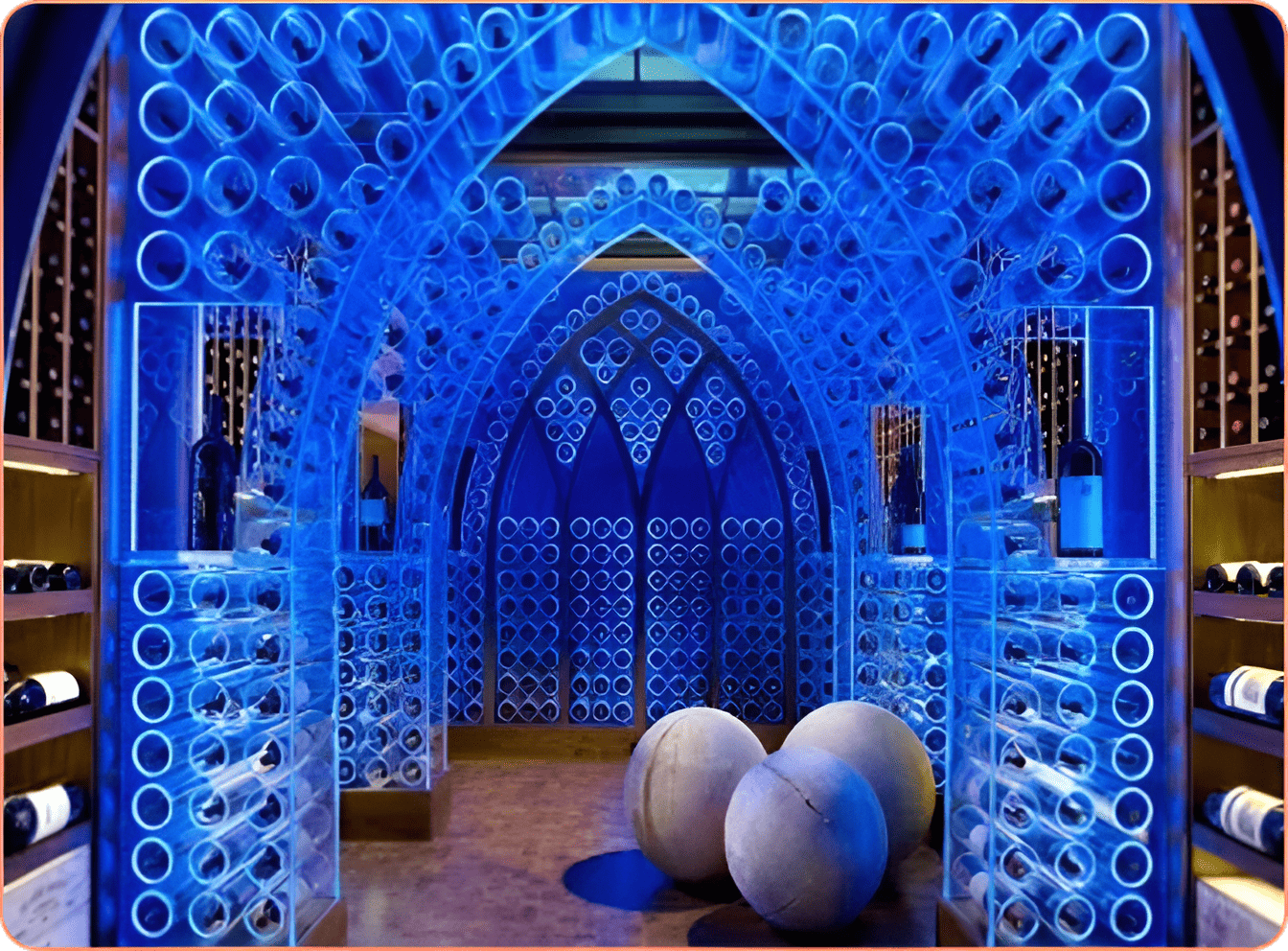
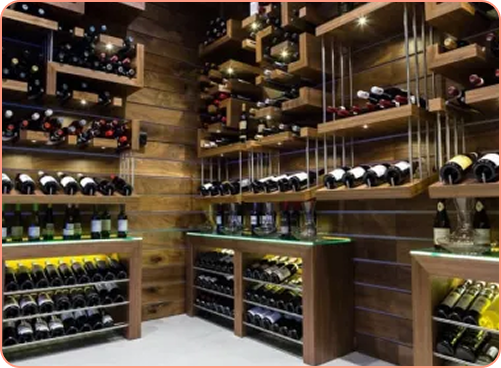
Wine cellars are more than just storage rooms. They are carefully designed spaces where the cellar and the wine form a single ecosystem: a stable microclimate, convenient collection organization, and an exclusive interior reflecting the owner’s taste and lifestyle.
We design both wine cellars in a home (apartment, cottage, townhouse) and large wine cellars for private collections and restaurants — with bespoke design, premium materials, and reliable engineering solutions. If you want to buy a turnkey wine cellar, we handle the full cycle: from concept and 3D design to installation and commissioning.
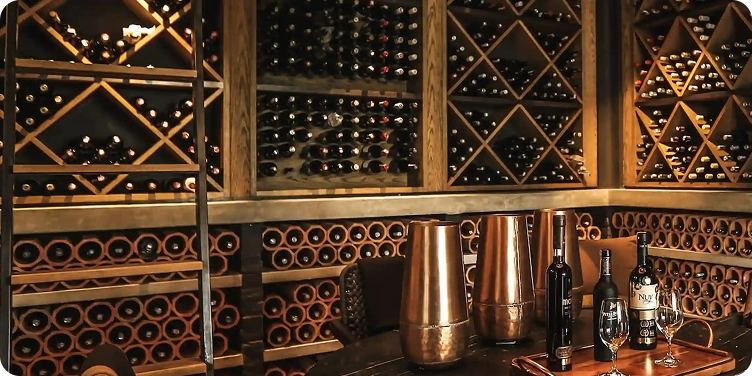
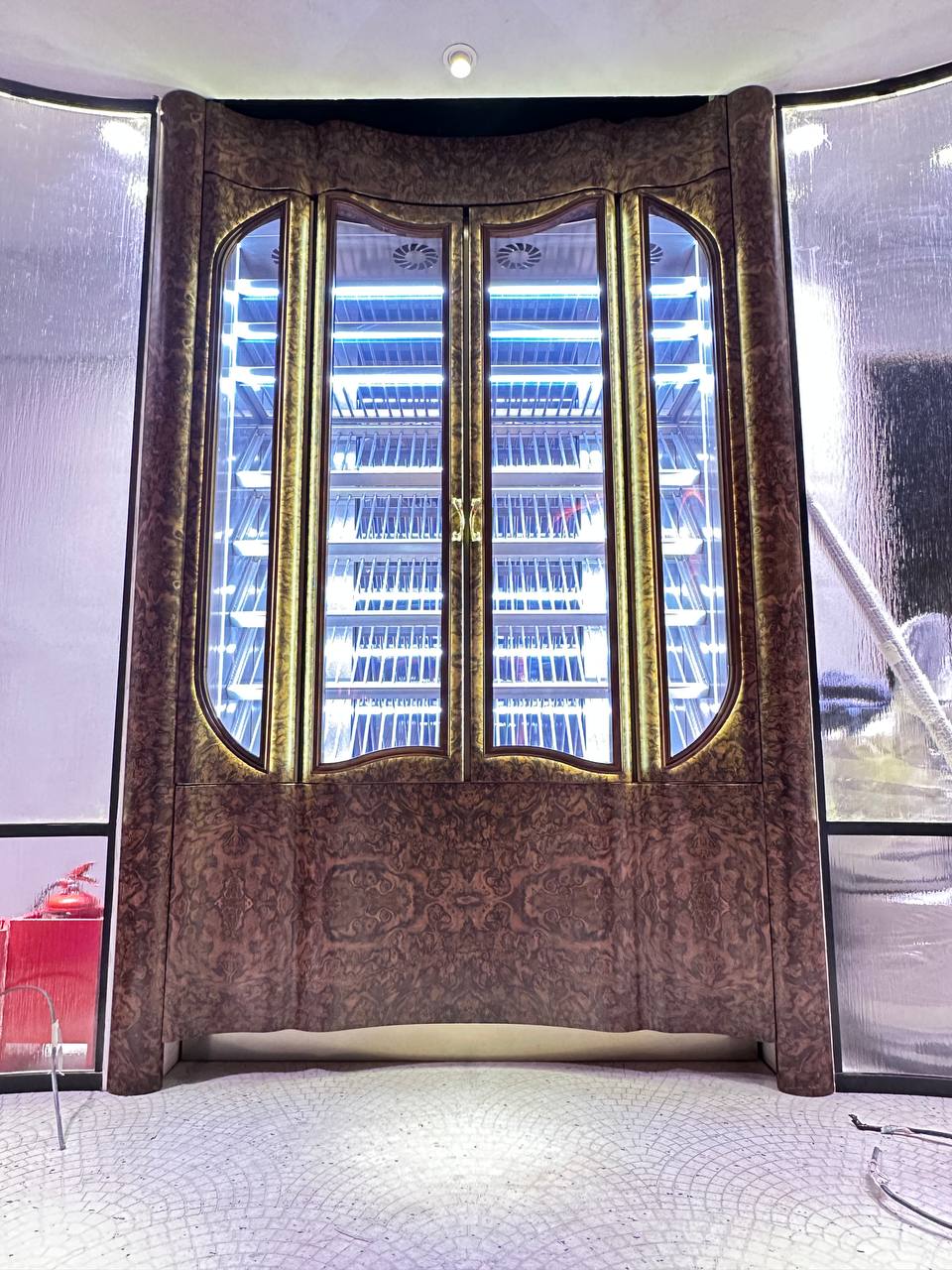
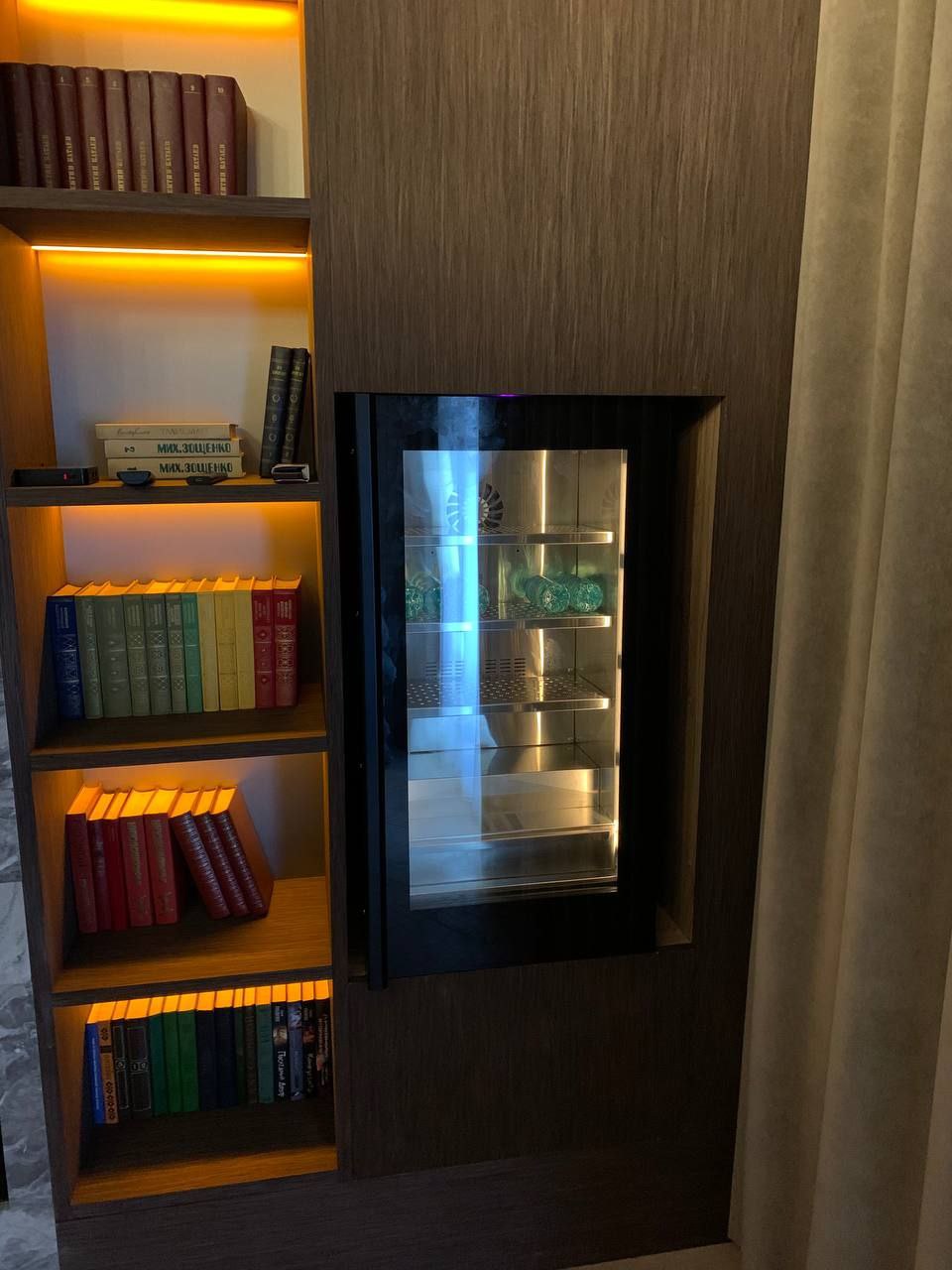
We will quickly and professionally answer any questions about our wine cellars, offer options, and discuss manufacturing and installation terms. Contact us to get a tailored solution for storing and showcasing your wine collection.
Get a consultation
There are two types of wine cellars:
If your wine space is above ground, it is more accurate to call it a wine room. We’ll help you choose the right format: a compact home wine cellar for 200–400 bottles or a large wine cellar for 1,000+ bottles — depending on your collection goals and the room architecture.

Whether you have a passive or an active wine cellar, we recommend an average temperature of +12 °C for proper long-term wine storage. Lower temperatures won’t harm the wine, but they will slow down maturation.

Humidity in your wine cellar should be between 60% and 70%, and most importantly it should not drop below 50%. High humidity — 80% and above — can lead to mold on corks and bottles.

Pay special attention to cellar ventilation: without fresh air, mold and a musty smell can appear. At the same time, don’t overdo it so the temperature doesn’t rise above the desired level.
They allow guests to see the label and store bottles more compactly than vertical storage. In some configurations the cork may not be in contact with the wine; in most cases this is a good option for wines ready to drink. Be sure to consider where the rack fasteners will be placed and whether they will be visible. This is especially important in premium wine cabinets.
It is very important to plan the rack layout and the space ergonomics in detail. We usually offer several layout options if the room allows.
Many clients want a small table inside the cellar. Keep in mind that staying in a cold room for a long time may be uncomfortable, but a table is definitely useful when you need to place several bottles.
If the room is underground, it is crucial to properly waterproof the exterior walls in advance to prevent dampness. This is the main issue for buried spaces.
Internal waterproofing can also be added if there are any humidity issues.
Insulation is usually not required if the cellar is underground. However, the ceiling can become a source of heat if the first floor is heated, and in that case the cellar ceiling should be insulated.
For a wine cellar operating at +10°C to +12°C, a standard insulated exterior door is suitable. Avoid interior wooden or MDF doors, as condensation may form and damage the finish.
Airtight and/or thermally insulated doors like those used in refrigeration rooms are also unnecessary, since they are designed for temperatures below +5°C.
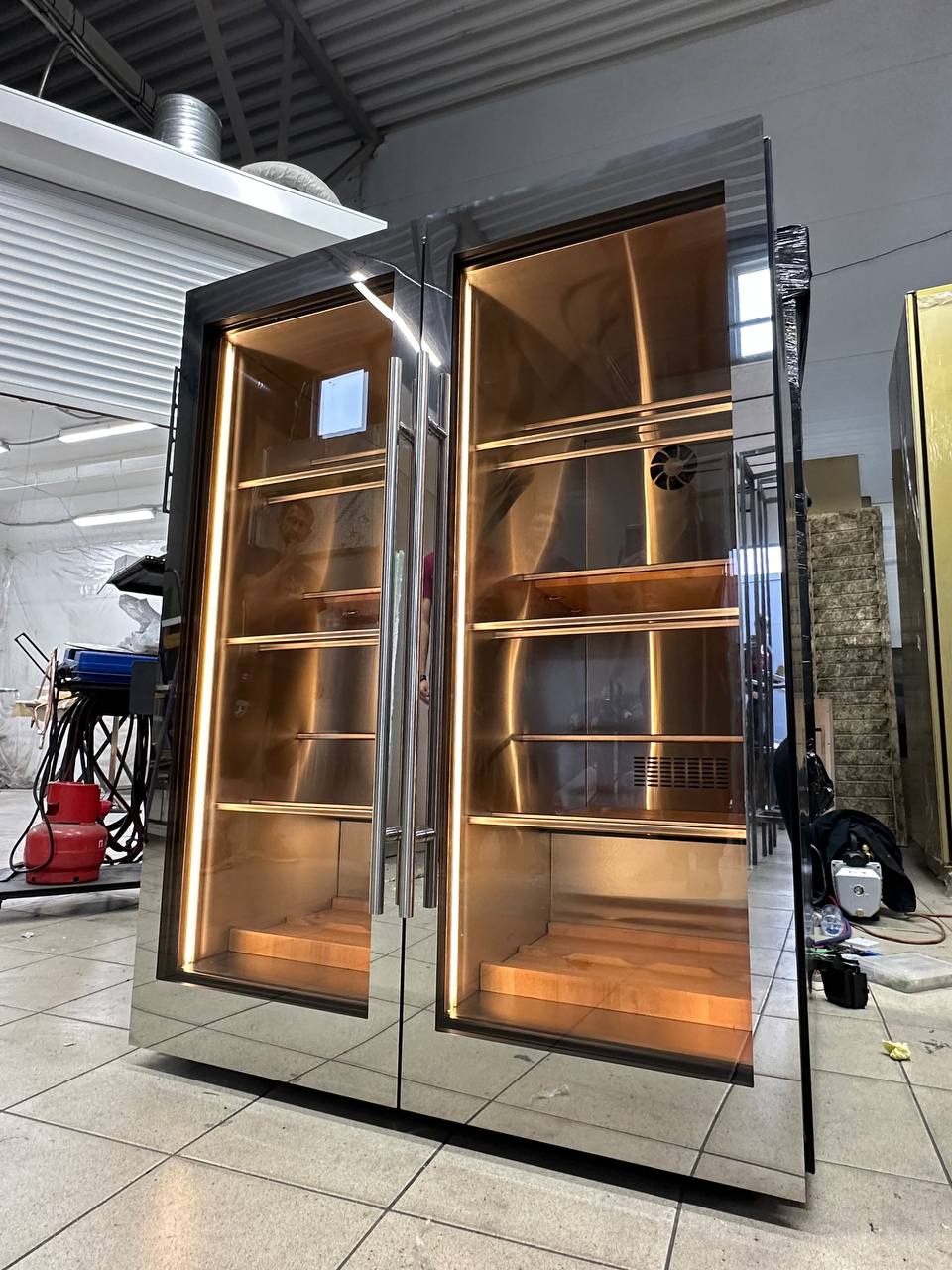
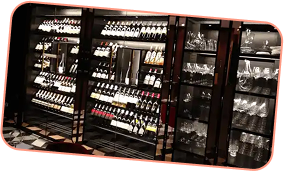
For a premium cellar, we manufacture insulated glass doors, including frameless glazing. This allows you to showcase the cellar's beauty while keeping the cold inside.
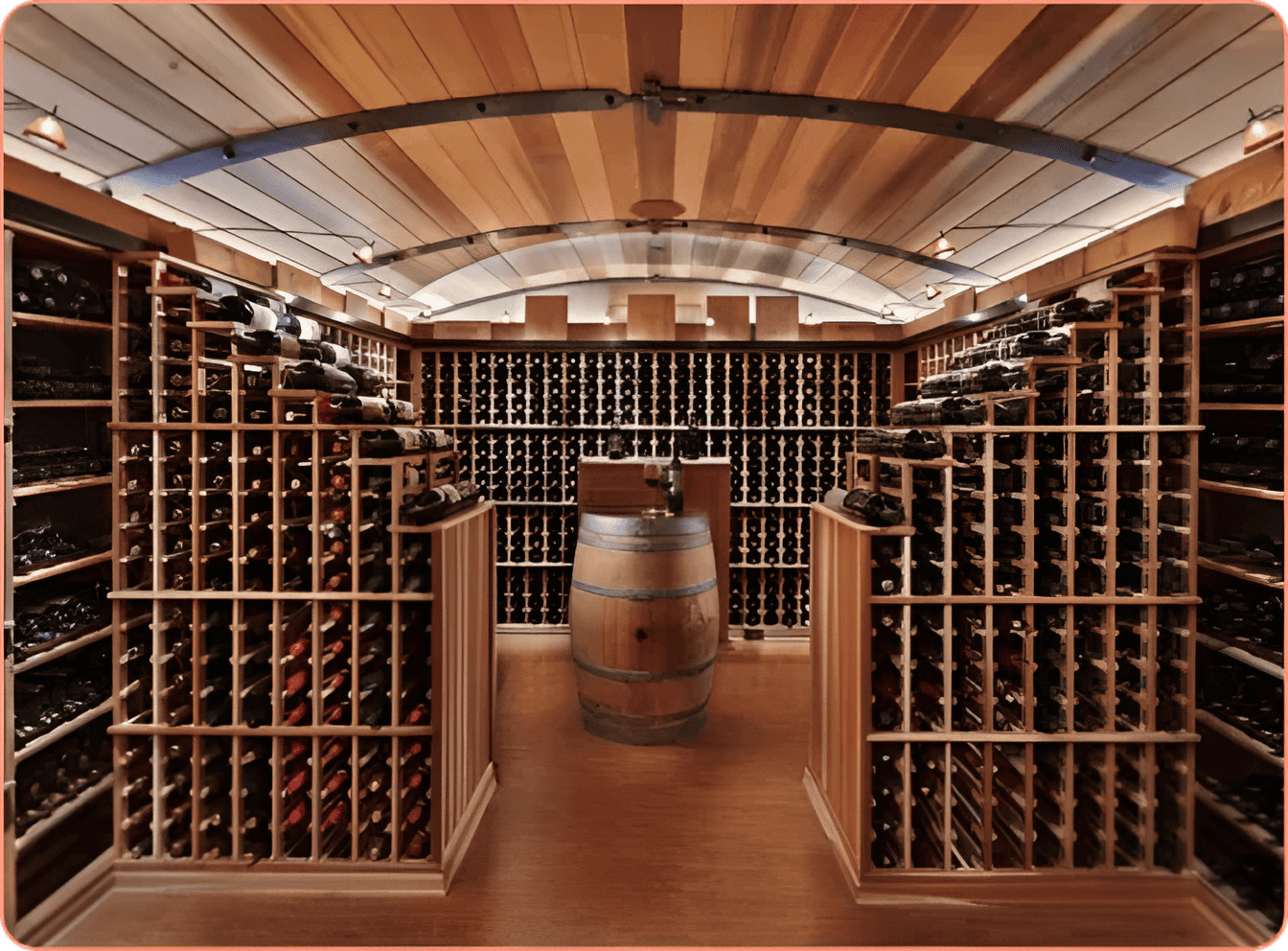

Special attention should be paid to an active cellar with an air-conditioning system. Note that air conditioning does not eliminate the need for ventilation.
Proper ventilation is designed according to the project and depends on the room area. In general, this includes a supply duct and an exhaust duct of 100 mm diameter with smooth airflow adjustment.
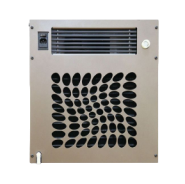
Made as a single unit, typically installed in a wall opening: the cold side faces the cellar and the hot side faces outdoors or a technical room.
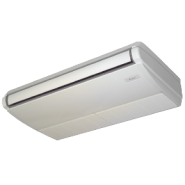
The indoor cold unit is installed on the cellar ceiling, while the outdoor unit with compressor and hot radiator is installed outside. Refrigerant lines run between the units.

Like a ceiling split, it consists of two units separated by up to 30 m. The indoor unit is mounted on a wall. This is the most common solution.
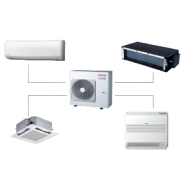
Consists of several indoor units and one powerful outdoor unit. We build these to order for multi-room wine cellars.
A standard refrigerant line consists of two copper pipes of different diameters and a control cable. One pipe is installed with rubber insulation. It is important to make the insulation airtight because the pipe remains cold during operation and may form condensate when in contact with air — it can drip.
In addition to refrigerant lines, condensate drainage must be considered. Condensate always appears on the cold radiator during operation. It should be drained to a sewer or outdoors — by gravity or using a drain pump. This requires careful design.
When using air conditioning, it makes sense to insulate the room as much as possible to achieve stable performance regardless of wall temperature and supply air.
Standard insulation is 100 mm of material such as Penoplex. We recommend PIR panels as they are currently the most energy-efficient and do not absorb moisture like mineral wool.
This is not a trivial question. Most often, a cellar has a single long-term storage temperature of 10–12 °C. Sparkling wine often needs about +5 °C, white wine a bit warmer, and for red wine +10 °C can be too cold.
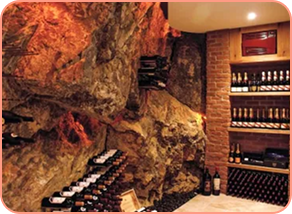
Whether the cellar is passive or active, we recommend an average temperature of +12 °C for proper long-term wine storage. Lower temperatures won’t harm the wine, but will slow down its maturation.
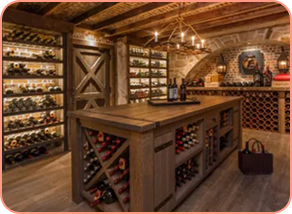
Humidity in your wine cellar should be between 60% and 70%, and most importantly it should not drop below 50%. High humidity — 80% and above — can lead to mold on corks and bottles.
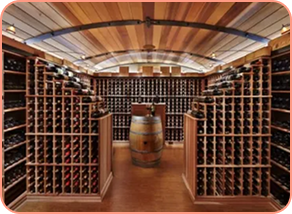
Pay special attention to cellar ventilation: without fresh air, mold and a musty smell can appear. At the same time, don’t overdo it so the temperature doesn’t rise above the desired level.
A bespoke concept matched to your interior and usage scenarios (home, restaurant, chef’s assembly). Capacity calculation: from a home wine cellar to a large cellar for rare wines. Turnkey engineering: waterproofing and insulation, ventilation, climate control, monitoring. Premium materials: natural wood, stone, metal, glass. Want to buy a wine cellar? We’ll choose the format, estimate the budget, and create a 3D visualization before work starts.
Get a consultation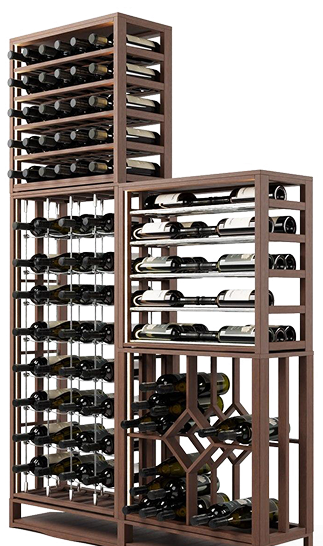
“Winekeys” delivers premium-quality solutions: warranty, exclusive technologies, and modern, user-friendly design for your space.

Processing your request within 30 minutes and clarifying requirements
Preparing technical documentation and approving the design project
Discussing project details with the client and taking measurements
Preparing a preliminary estimate based on client inputs
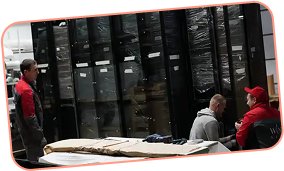
Manufacturing equipment according to the approved technical specification
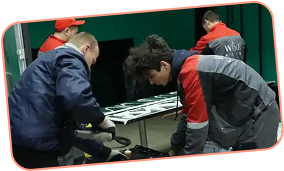
Final fit-out work, equipment installation, and commissioning